

Bitget Review
Published: 17 May 2026 Last updated: 26 May 2026
Price: Free to join (trading fees apply)
Pros
- Strong copy trading feature set
- Large asset and trading pair selection
- Publishes proof of reserves
Cons
- Copy trading increases risk if followed without understanding
- Offshore jurisdiction — regulatory clarity varies by region
- Not available in the United States
What is Bitget?
Bitget launched in 2018 and has grown into one of the larger offshore exchanges, covering spot trading, futures, options, and a copy trading system that lets you automatically mirror positions from other traders.
The company is set up in the Seychelles and works in many countries, except the US. Available features and fiat payment options vary quite a bit by region — what you see in the interface may not be what you can actually use in your country.
Quick facts
| Type | Centralised cryptocurrency exchange |
| Founded | 2018 |
| Jurisdiction | Seychelles — regulatory standing varies by user country |
| Availability | Global — not available to US users. Check bitget.com for your country |
| Assets listed | 500+ cryptocurrencies |
| Fiat support | Available in supported regions — deposit and withdrawal methods vary by country |
| KYC | Required for withdrawals above basic limits; full ID verification for higher tiers |
| Trading fees | Tiered maker/taker structure based on 30-day volume and BGB holdings — verify current rates at bitget.com |
| Products | Spot, futures, options, copy trading, earn, bots |
| Custody | Custodial — Bitget holds private keys on your behalf |
| Proof of reserves | Published — verify current status at bitget.com |
Quick verdict
Bitget works for two types of people: those who want to explore copy trading across a structured marketplace, and active traders who want spot, futures, options and bots all in one place.
If you're looking to simply buy and hold Bitcoin, this isn't the best place to start. Futures and copy trading are just a few taps away in the navigation menu. Getting into a leveraged copy trade can be done in minutes — useful if you know what you're doing, a problem if you don't.
What you see in the interface isn't always what's available in your country. Check availability, KYC tiers and fiat options before sending anything.
What we checked in this Bitget review
- Account setup and KYC tiers, including what each level actually unlocks for withdrawals
- Country availability and where Bitget draws the line
- Fiat deposit routes: card, SEPA bank transfer, P2P and third-party services
- The spot trading interface, order types and available pairs
- Futures, including what the demo mode looks like before you use real money
- Copy trading: browsing trader profiles, allocating capital and setting stop-losses
- Full cost picture: maker/taker rates, card markups, withdrawal fees and funding rates
- Reward campaign conditions and whether they hold up in practice
- Common complaints from Trustpilot, Reddit and app stores
- How Bitget compares to Bybit, OKX and Kraken
Best for
- People comparing copy trading strategies before putting real capital behind one
- Active traders who want spot, futures, options and bots in one place
- Non-US users evaluating large offshore exchanges that offer derivatives
- Anyone who understands leverage and wants market depth, not hand-holding
Not ideal for
- US users — Bitget is not available in the United States
- Complete beginners — the interface and product range can be a bit overwhelming. Kraken or Coinbase are simpler starting points if you just want to buy something and hold it
- Anyone new to leverage — a futures position can be liquidated faster than you'd expect
- Anyone who needs a regulated exchange — Bitget is offshore. If regulatory standing matters for your situation, Kraken is the clearer option
Buying crypto on Bitget
There are several ways to buy on Bitget: card, P2P, third-party payment services and bank transfer. European users get SEPA as an option. All of these appear on one screen, which looks convenient — until you realise each has a different cost structure.
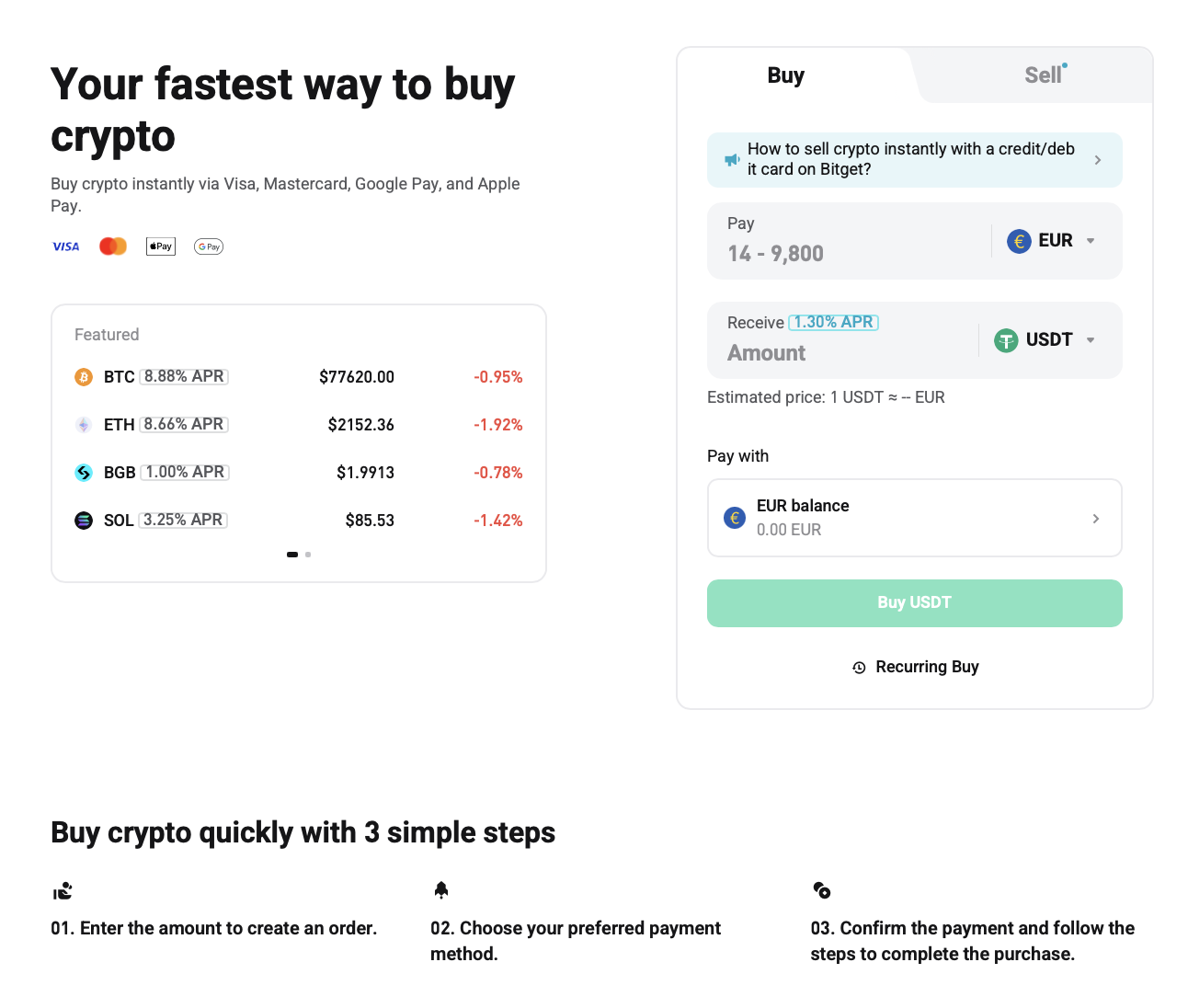
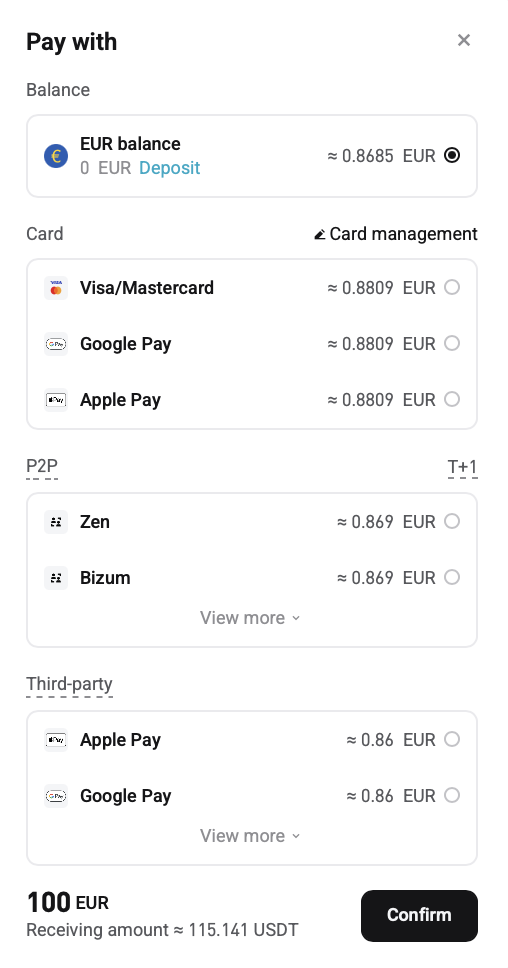
Card is the fastest option but the most expensive. Processing fees stack on top of the exchange spread, so the number that matters is the output amount on the confirmation screen — not the rate shown upfront. Check that figure before you confirm.
In some European countries, SEPA bank transfer is available and tends to be the cheaper fiat route. Settlement is not always same-day, and the option may not appear depending on your account tier or country.
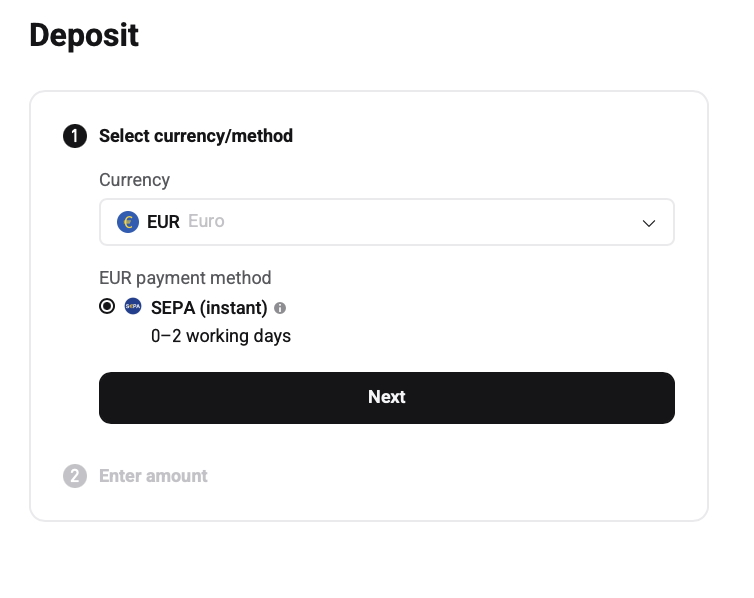
With P2P you're dealing directly with the person selling. They set the price, not Bitget, so premiums above spot are common. Before placing an order, check the seller's completion rate, available payment methods and stated terms.
You can set up recurring buys at fixed amounts and regular intervals. Spread and fees still apply to each order.
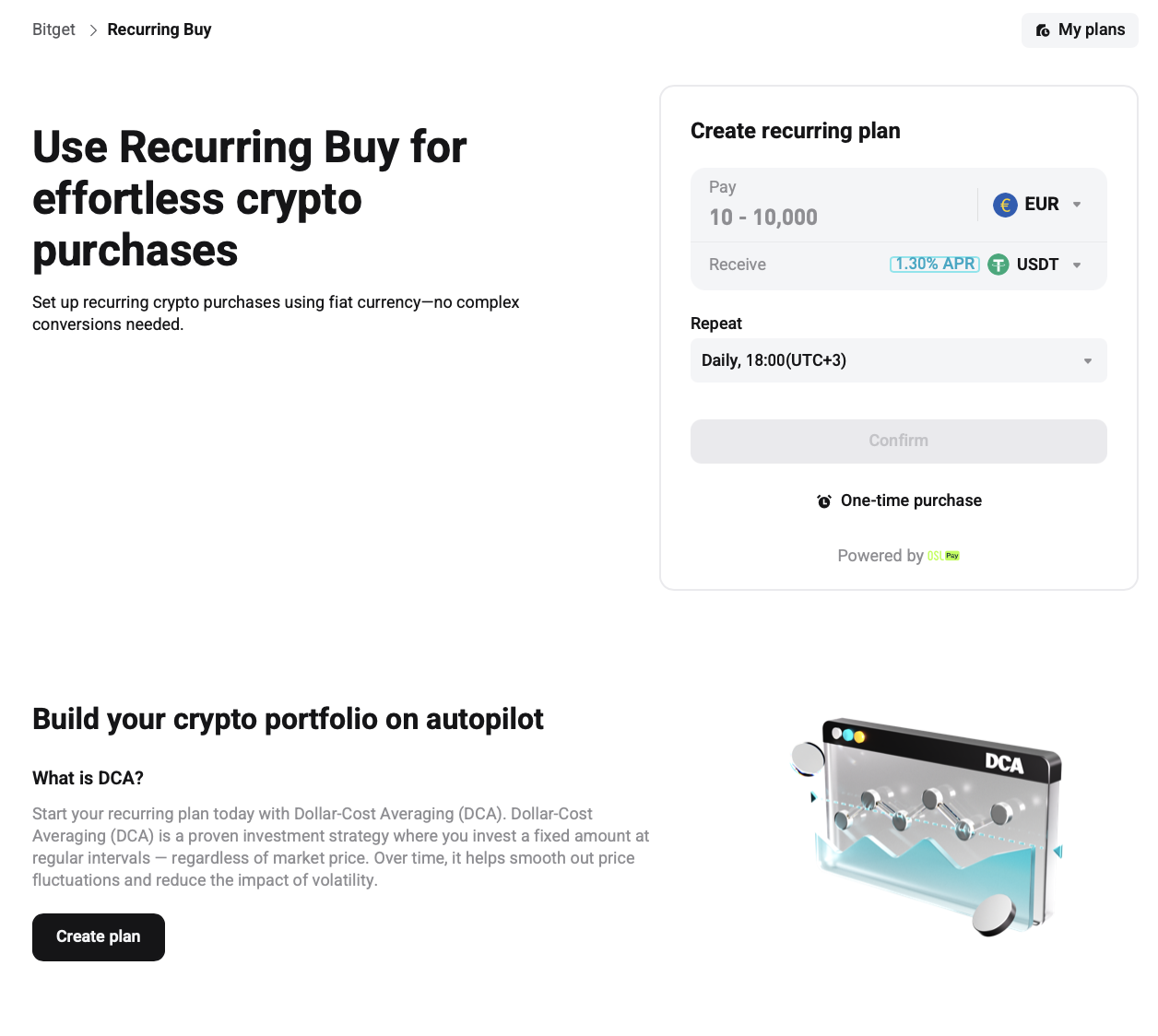
What's available for payments depends on where you are. Not everything you see in the interface can actually be used in your region — check before choosing a deposit route.
Spot and futures trading
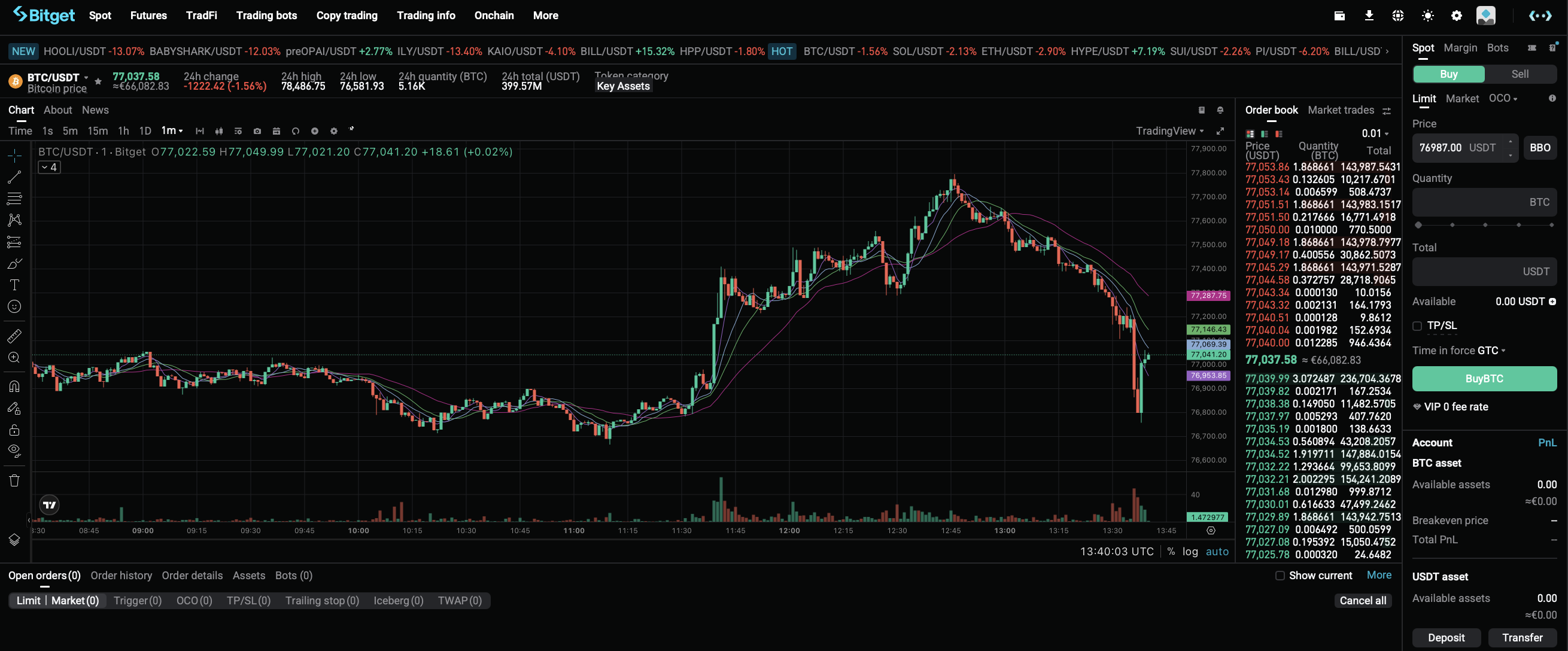
The spot trading interface is full-featured: order book, chart tools, order types and portfolio view. For an active trader who uses limit orders and reads charts, Bitget is in the same league as Bybit and OKX on depth.
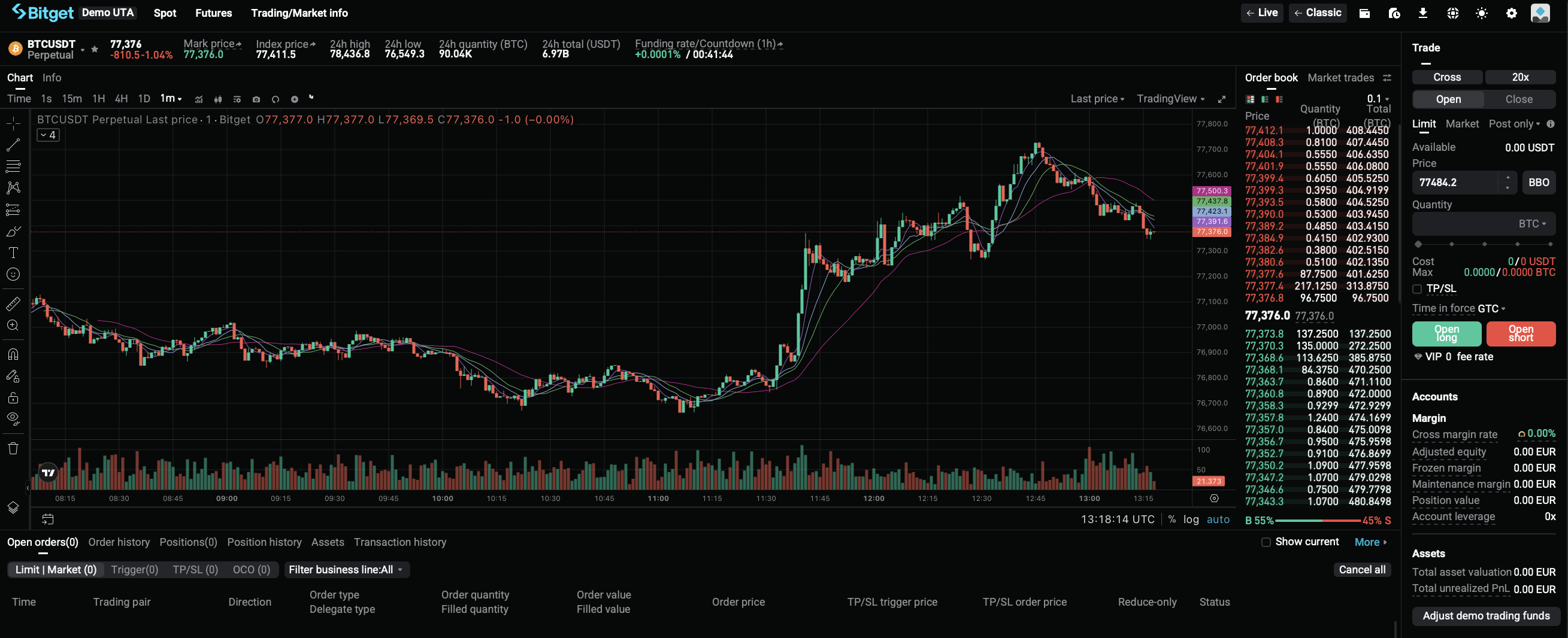
Futures trading is a few taps from the main navigation. A demo mode is available. Use it before touching real funds. Price movement speed and how margin liquidations work under leverage are not intuitive, and the demo costs you nothing to find out.
Fees
Bitget uses a tiered maker/taker structure based on 30-day trading volume and BGB (Bitget Token) holdings. The headline rates are similar to Bybit and OKX, but what you actually pay depends on your tier and which product you're using.
Spot fees, futures fees, card purchase costs and withdrawal fees are all different numbers. Fiat purchases via card or third-party services carry costs that are usually embedded in the exchange rate rather than shown as a flat fee — the output amount on the confirmation screen tells you more than the stated percentage.
Crypto deposits are generally free. Withdrawal fees depend on the asset and network. Check the current schedule on bitget.com before scaling up — tiers and rates change.
Where it gets expensive
Maker/taker fees are only part of the picture. These add up more quietly:
- Spreads: The gap between buy and sell price is a cost even on zero-fee trades. On less liquid pairs, spreads can be wide.
- Futures funding rates: Holding a leveraged position overnight accumulates costs. For positions held over days or weeks, this can outweigh the benefit of low trading fees.
- Card and third-party purchase costs: These fees are embedded in the exchange rate, not shown as a line item. Compare the actual output amount to the spot price before confirming.
- P2P premiums: P2P sellers set their own prices. Premiums above spot are common, particularly for certain payment methods.
- Withdrawal network fees: Fees depend on the asset and the network you choose. Picking a congested or wrong network can cost more than expected.
- Campaign terms: A reward that requires a minimum deposit or volume in a set window is a condition, not a bonus. If it pushes you to trade more than you planned, it costs you.
None of this is specific to Bitget — it applies across Bybit, OKX and most large exchanges. The effective cost is always higher than the headline rate.
KYC and country availability
Bitget is not available to US users. Beyond that, features and fiat access vary — some jurisdictions have partial access or restricted product ranges, and available payment methods differ by region.
KYC is required to unlock any meaningful withdrawal access. Unverified accounts face low limits. Full verification requires a government-issued photo ID and typically includes a selfie or facial scan. Processing times vary and can slow down when many users are verifying at once.
Before you deposit on Bitget
Copy trading: useful, but not risk-free
Bitget's main feature is copy trading. The marketplace lets you browse trader profiles, filter by strategy, win rate and drawdown, then allocate funds to mirror their positions automatically. The interface is designed to make it quick to find a trader and start — the whole process takes just a few minutes.
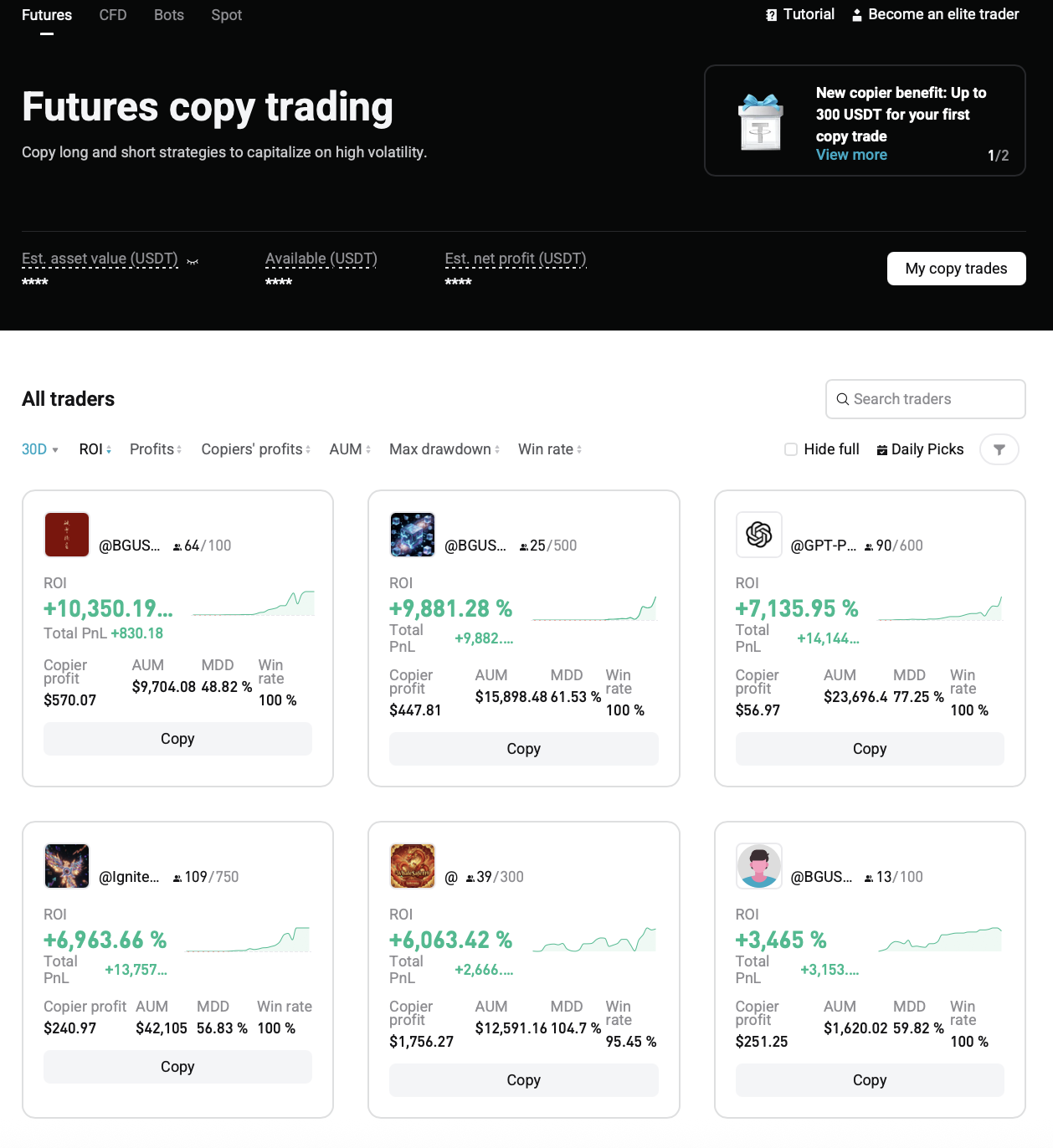
That ease is also the risk. Copy trading and futures sit alongside spot buying in the same navigation. Someone new can get into a leveraged copy trade in a few clicks without really understanding what they've committed to.
- Past performance doesn't carry forward. A trader with a strong six-month record can still have bad months — and those losses are yours.
- If the trader uses futures with leverage, your copied positions carry that leverage. Drawdowns can happen fast.
- How much you allocate to one trader is how concentrated your bet is. Spreading across a few is basic risk control.
- Set stop-loss limits per trader before you put money in — they cap how much a bad run costs you.
- ROI figures in the marketplace are historical. Strategies that worked in a trending market can behave very differently when the market moves sideways or turns volatile.
You are placing capital behind another person's trading decisions. Their leverage is your leverage. Their drawdown is your loss.
Bonuses and reward campaigns
Bitget
Bitget — Check Current Campaigns
Bitget runs signup bonuses and trading reward campaigns. Terms vary — eligibility, deposit minimums, volume requirements and expiry windows all differ by campaign, and conditions can change between when you register and when you try to claim. Check the current terms on the official site before factoring any offer into your decision.
Offer terms can change. Check the current details on the official site before using the code.
The headline number is not the offer — the conditions are. Deposit minimum, volume threshold, expiry window, country eligibility. If those terms don't work for your situation, the offer has no value. Check them before signing up, not after you've deposited.
What users complain about
Most problems happen after users deposit first and read the rules later. The recurring complaints from Trustpilot, Reddit and app store reviews:
- KYC delays — verification can take longer during busy periods; complex cases can sit for days without updates
- Withdrawal holds — larger amounts or accounts flagged for compliance review can face delays with limited communication
- Account restrictions post-registration — users who registered from unsupported jurisdictions have reported account blocks after depositing
- Bonus not credited — campaign conditions weren't fully met, or terms changed after sign-up; the reward didn't appear as expected
- Copy trading losses — users who followed high-ROI traders without understanding leverage or drawdown risk have reported significant losses in short periods
- Futures liquidations — new users entering futures without understanding margin requirements have had positions liquidated unexpectedly
- Confusion between products — P2P, card purchase, spot trading and futures have different pricing, fees and risk profiles; users who conflated them report unexpected costs
- Support response times — complex cases can take days to resolve; live chat quality is inconsistent
These issues aren't unique to Bitget — they come up across Bybit, OKX and most offshore exchanges. The one factor that consistently makes a difference is whether users read the terms before depositing or after.
Bitget vs alternatives
| Bitget | Bybit | OKX | Kraken | |
|---|---|---|---|---|
| Available in US | ✗ No | ✗ No | ✗ No | ✓ Yes |
| Copy trading | ✓ Yes (focus) | ✓ Yes | ✓ Yes | ✗ No |
| Derivatives | ✓ Yes | ✓ Yes | ✓ Yes | Limited |
| Built-in Web3 wallet | ✗ No | ✗ No | ✓ Yes | ✗ No |
| Fiat deposits | Regional | Regional | Regional | ✓ Wide support |
| Jurisdiction | Seychelles | Dubai | Cayman Islands | US-regulated |
| Best for | Copy trading, futures | Derivatives, active trading | Web3 + active trading | Regulated, beginner-safe |
Bitget vs Bybit: Both cover similar ground — spot, futures, copy trading, tiered fees, no US access. Bitget places copy trading more centrally as a product; Bybit is generally larger by volume with deeper derivatives liquidity. Compare the current fee structure for your trading volume and interface preference. See our Bybit review.
Bitget vs OKX: OKX has a broader product range including a built-in non-custodial Web3 wallet. Bitget's copy trading is more purpose-built. If DeFi access alongside trading matters to you, OKX has the edge there. See our OKX review.
Bitget vs Kraken: Kraken is the clearer option for US users, anyone who wants a long-established regulated exchange, or anyone who wants to buy crypto via bank transfer and hold it. Bitget has more advanced trading tools and a wider asset selection, but Kraken's regulatory standing is considerably more straightforward. See the exchange comparison for a full side-by-side view.
Custody risk
Bitget is a custodial exchange — it holds your private keys, not you. This is true of all centralised exchanges, but worth being clear about:
- If Bitget is hacked, faces financial difficulty, or restricts withdrawals, your access to funds could be affected
- Compliance holds and account freezes can limit your ability to withdraw, sometimes with little notice
- You are relying on Bitget's security practices and solvency, not controlling your own keys
For crypto you plan to hold long-term, a self-custody hardware wallet removes this exposure. See our hardware wallet comparison or wallet overview.
Security practices for Bitget users
- Enable 2FA from day one: Use an authenticator app, not SMS. SMS is vulnerable to SIM-swap attacks.
- Use a unique password: Do not reuse passwords from other services.
- Access via the official URL only: Go directly to bitget.com. Phishing sites targeting crypto exchange users are common. Bookmark the real URL rather than clicking links from emails or social posts.
- Set copy trading stop-losses: Configure stop-loss limits per trader before allocating capital — they limit how much a bad period costs you.
- Limit what you keep on the exchange: Keep on Bitget only what you are actively trading. Move anything you plan to hold long-term to a self-custody wallet.
Official pages worth checking
Before depositing, these are worth looking up directly on bitget.com — all are subject to change:
- Fee schedule — spot maker/taker rates, futures fees, withdrawal fees by network and tier
- KYC and verification requirements — what each level requires and what withdrawal limits apply
- Country and region restrictions — available products and fiat options vary; check your jurisdiction specifically
- Active reward and campaign terms — deposit conditions, volume requirements, country eligibility and expiry periods
- Copy trading risk information — particularly relevant if you plan to follow traders who use leverage
- Futures risk disclosures — required reading before using any leveraged product on any exchange
- Withdrawal rules — network options, minimum amounts and any current withdrawal holds or limits
None of these pages are static — Bitget updates products, pricing and availability regularly. Checking them before depositing takes a few minutes and avoids most problems that could have been prevented.
Frequently Asked Questions
Is Bitget safe?
Bitget is a sizeable global exchange that publishes proof of reserves. As with any centralised exchange, Bitget holds your private keys — not you. If the exchange is compromised or faces financial difficulty, access to your funds could be affected. For crypto you plan to hold long-term, a self-custody hardware wallet is a safer option than leaving it on any exchange.
Does Bitget require KYC?
Yes. Bitget requires identity verification for withdrawals above basic limits. Full KYC typically involves a government-issued photo ID and may include facial verification. Requirements and thresholds vary by country — check the current rules on the official Bitget site for your jurisdiction.
Is Bitget available in the US?
No. Bitget does not serve US users. If you are based in the United States, look at regulated alternatives like Kraken or Coinbase, which are licensed to operate there.
What are Bitget fees?
Bitget uses a tiered maker/taker fee structure based on 30-day trading volume and BGB token holdings. Higher volume and larger BGB balances reduce fees. Always check the current fee schedule on bitget.com before making decisions based on specific numbers — rates can change.
Does Bitget offer bonuses?
Bitget may run signup bonuses and trading reward campaigns. Eligibility, deposit minimums, volume requirements and expiry periods vary by campaign. Read the terms carefully before factoring any campaign into your decision — conditions must typically be met before any reward can be withdrawn.
How does Bitget copy trading work?
Bitget copy trading lets you automatically mirror the trades of other traders on the platform. You choose a trader to follow, set a copy amount, and their positions are replicated proportionally in your account. It sounds simple, but copy trading does not remove risk — you are exposed to the same market movements as the trader you follow, including losses. Past performance is not a guarantee of future results, and leverage amplifies both gains and losses.
Is Bitget good for beginners?
Bitget is easier to start with than some exchanges, but the copy trading and futures features add complexity that beginners should understand before using. If you only want to buy crypto and hold it, a simpler app like Kraken or Coinbase will feel less overwhelming. If you want to explore copy trading, take time to understand how position sizing, drawdowns and risk settings work before following anyone.
What should I check before depositing on Bitget?
Before depositing: confirm Bitget is available in your country, understand the KYC level required for your expected withdrawal amounts, check which fiat deposit options are available in your region, and read any bonus campaign terms carefully. If you plan to use copy trading or futures, make sure you understand how leverage and position sizing work before putting real money in.
Related pages
- Best Crypto Exchanges 2026 — Full Comparison
- All Crypto Reviews
- Bybit Review — Close Competitor for Futures Traders
- OKX Review — Web3 Wallet and Broad Asset Selection
- Coinbase Review — Beginner-Friendly Option for Simple Buy and Hold
- Best Hardware Wallets — Store Your Crypto Safely
- Seed Phrase Safety Guide
Ready to explore Bitget? Use the official route and review the current terms before signing up.
Visit SiteHow We Evaluate Crypto Exchanges
We assess exchanges on fees and fee transparency, KYC requirements and country availability, withdrawal reliability, security practices and custody model, supported assets and trading pairs, fiat on/off-ramp access, bonus and reward campaign terms, beginner usability, and patterns in real user complaints. We do not factor in whether a platform has an affiliate arrangement with us — exchanges are assessed on the same criteria regardless of commercial relationship.